The Giant's Causeway grounds remain accessible year-round, while the visitor centre generally operates from morning through late afternoon with seasonal variations. The coastal trails themselves do not close at sunset, though shuttle services and facilities stop earlier in the evening. Weather-related path closures occasionally affect cliff sections during periods of strong wind or heavy rain. Most visitors arrive between 10am and 2pm.
What is Giant's Causeway in Northern Ireland?
Set along the rugged north coast of Northern Ireland, Giant's Causeway is a UNESCO-listed coastal landscape formed by around 40,000 interlocking basalt columns created by ancient volcanic activity. Visitors access the site from the Giant's Causeway Visitor Centre near Bushmills, then walk or shuttle downhill to the shoreline and cliff paths. The experience combines geology, coastal walking, and local folklore in a compact but visually unusual setting. Most visitors spend between two and four hours here, depending on whether they stay only at the stones or continue along the wider cliff trails.
Why visit Giant's Causeway?
1/3
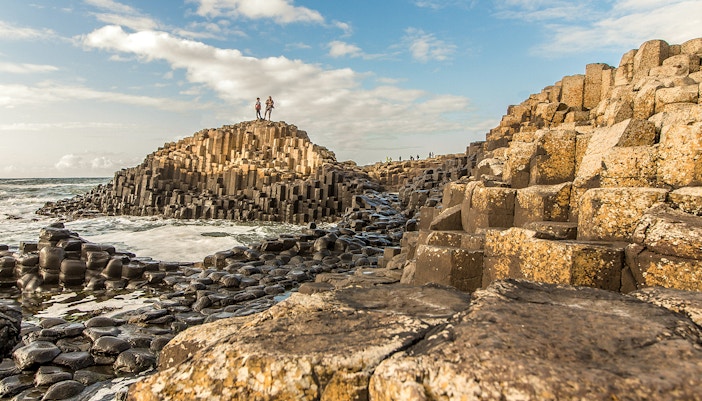
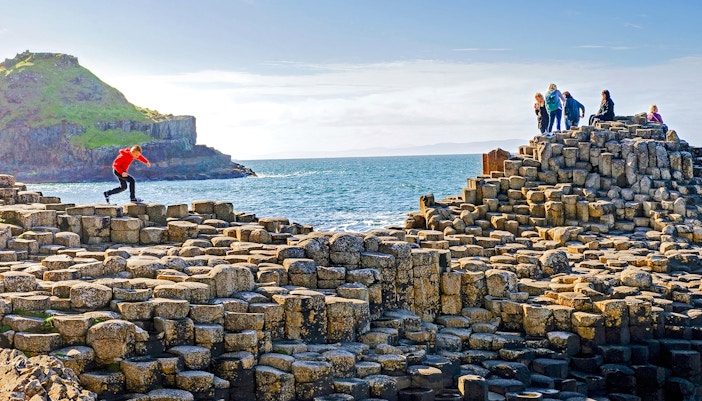
Walk across naturally formed basalt columns
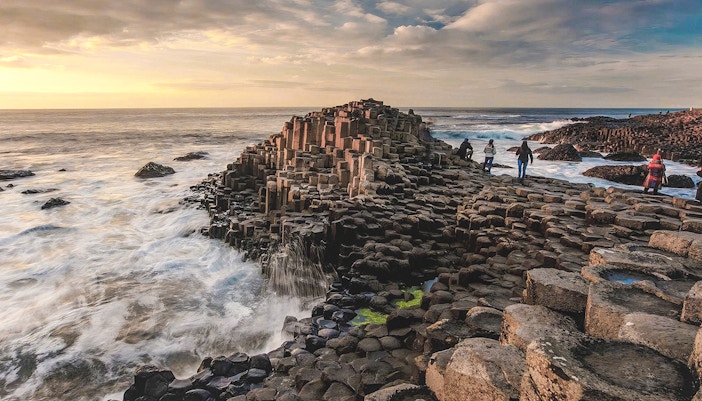
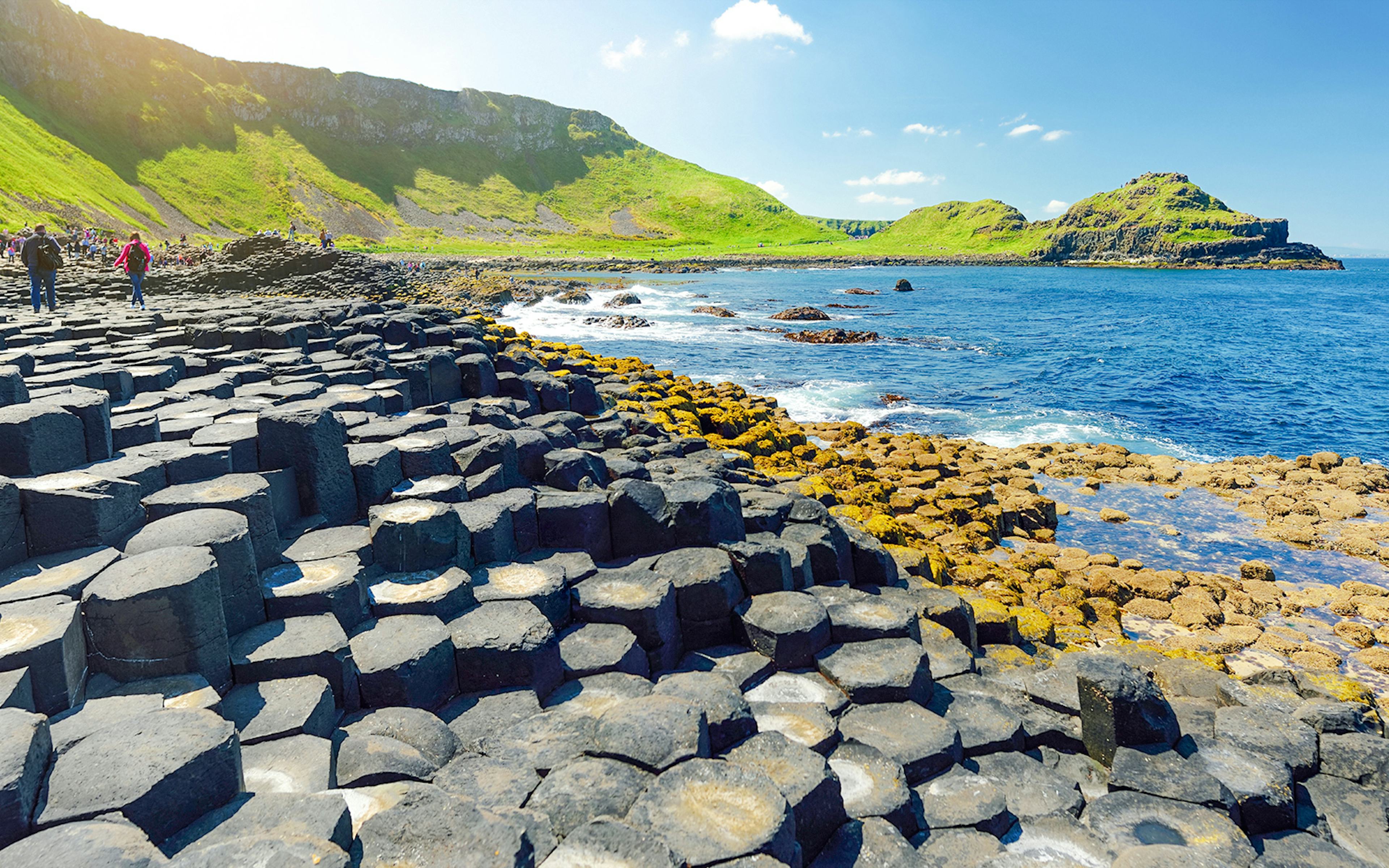
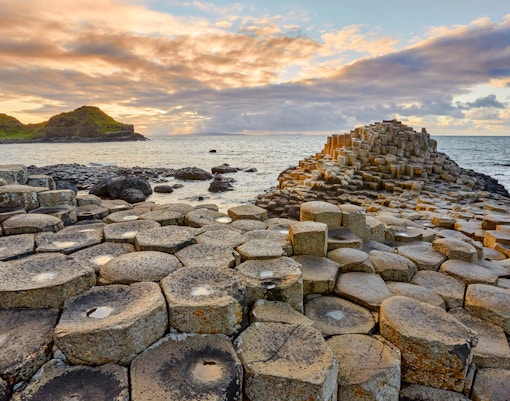
The shoreline is covered with hexagonal basalt stones formed by cooling lava flows around 60 million years ago. The columns create natural stepping patterns that visitors can walk across directly at sea level.
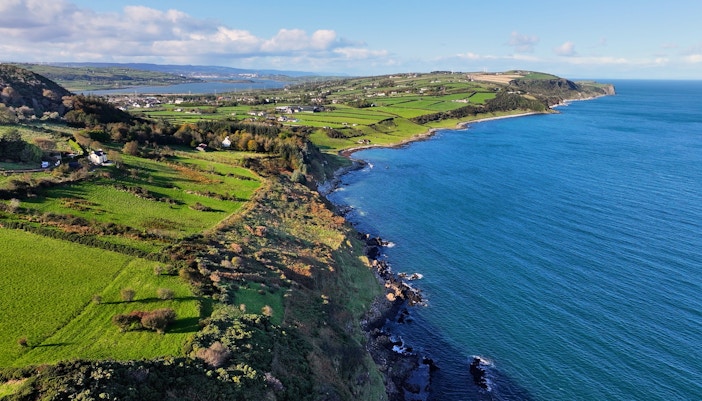
The coastal cliff route changes the scale completely
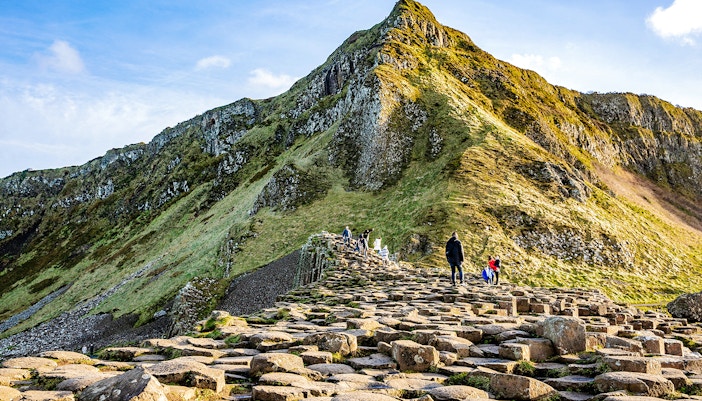
From the upper cliff paths, the Causeway appears as part of a much larger volcanic coastline rather than an isolated rock formation. The walking route includes steep cliffs, sea views, and visible layers of basalt formations.
Local legend shapes how visitors read the landscape
The site is closely tied to the Irish legend of the giant Finn McCool, who supposedly built the Causeway to reach Scotland. Many rock formations on-site are still identified through this folklore tradition today.
Plan your visit to the Giant’s Causeway
Best time to visit
May through September offers the longest daylight hours and the most reliable trail conditions. Early mornings before 10am are noticeably quieter, especially during summer coach-tour season. October brings fewer crowds and dramatic coastal weather without the winter daylight limitations. Winter visits are possible and often quieter, but strong winds and rain can reduce visibility and temporarily close upper walking routes.
Location and getting there
Giant's Causeway is located on the County Antrim coast, approximately 5 km northeast of Bushmills and around 95 km from Belfast. The nearest railway connection is Portrush, followed by a local bus connection to the visitor centre. Drivers can reach the site via the Causeway Coastal Route, with parking available beside the main entrance. The downhill walk from the visitor centre to the stones takes around 15 to 20 minutes.
What happens on the day
The descent from the visitor centre
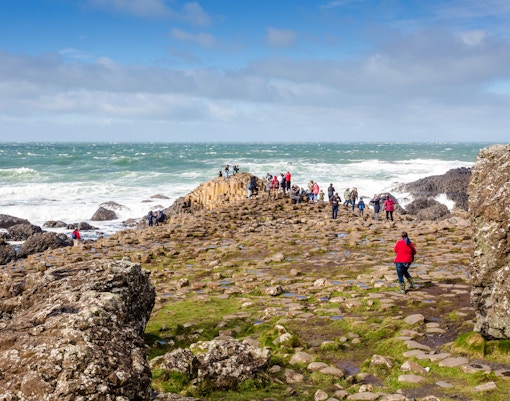
Most visits begin with the downhill road or walking path from the visitor centre towards the coast. The Atlantic becomes visible gradually as the cliffs open ahead. Shuttle buses operate between the centre and shoreline for visitors, avoiding the steep return climb. The downhill walk takes approximately 15 minutes; the uphill return feels longer in strong coastal wind.
The Grand Causeway basalt formations
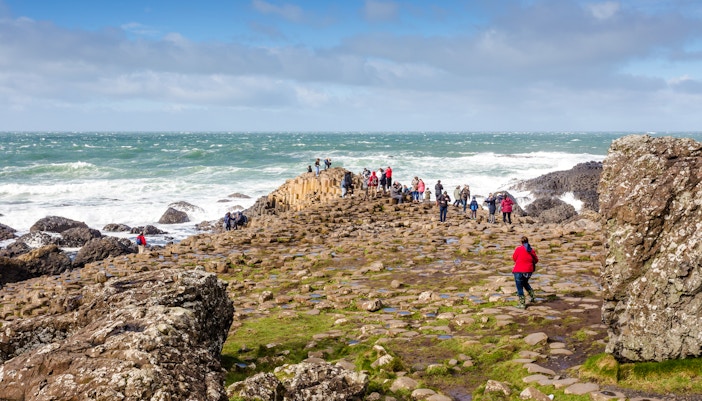
The main basalt formations spread outward into the sea in layered terraces known as the Grand Causeway. Visitors move directly across the stones rather than observing from a distance. The basalt surface varies between flat hexagonal steps and uneven wet rock closer to the waterline. Waterproof footwear matters more here than hiking boots specifically.
The cliff paths above the shoreline
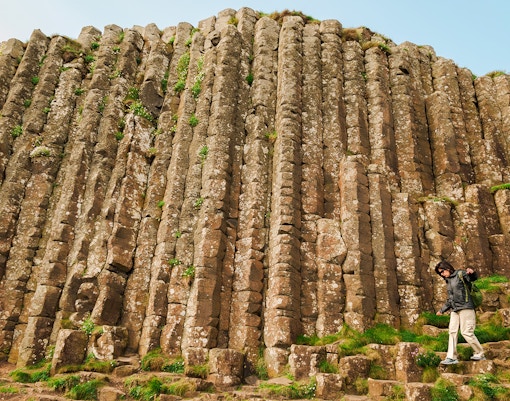
Upper walking routes continue east and west above the Causeway, connecting viewpoints such as the Organ Pipes, Giant's Boot, and Shepherd's Steps. These sections involve steeper inclines and exposed coastal paths. The cliff walk changes the experience from a geological site visit into a longer coastal hike. Wind exposure on the upper path is substantial even in summer.
The return through the visitor centre exhibitions
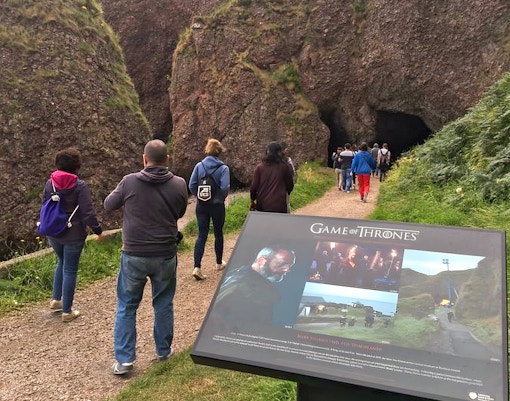
The visitor centre exhibitions focus on both the geological formation of the basalt columns and the folklore surrounding Finn McCool. Most visitors spend 30 to 45 minutes here after returning from the coast. Audio guides and interactive displays explain how volcanic cooling created the column structure visible along the shoreline. Late afternoon is the quietest time inside the exhibition space.
The context behind Giant's Causeway
The volcanic basalt columns at Giant's Causeway formed approximately 60 million years ago when lava cooled and contracted into polygonal shapes. The near-hexagonal pattern visible today is the result of natural fracture geometry rather than human shaping. Long before geological explanations existed, local folklore attributed the formations to the Irish giant Finn McCool, who supposedly built a crossing to Scotland to confront the Scottish giant Benandonner. Many named formations across the site, including the Giant's Boot and Wishing Chair, still reflect this storytelling tradition. Understanding both the science and the mythology changes how visitors interpret the landscape while walking across it.
What to know before you go
Need to know
- The basalt stones become slippery in rain and sea spray; waterproof shoes with grip are more useful than standard trainers.
- The lower Causeway route is accessible, but the upper cliff paths involve steep sections, stairs, and uneven terrain.
- Weather conditions on the north coast change quickly, even during summer; carry a waterproof layer regardless of the forecast.
- Visitor centre entry, parking, audio guides, and shuttle use may be bundled differently depending on ticket type or membership access.
Worth knowing
- Arriving before 10am significantly reduces crowd levels and improves photography conditions on the main stones.
- The cliff walk beyond the Grand Causeway is where the coastline feels most dramatic; many visitors stop too early near the main formations.
- Sunset light on clear evenings creates the strongest contrast across the basalt columns, though facilities close earlier than the trails.
Frequently asked questions about the Giant’s Causeway
Giant's Causeway is known for its naturally formed hexagonal basalt columns created by ancient volcanic activity and for the Irish legend connecting the site to Finn McCool. The combination of geology and folklore defines the experience.
The best conditions are usually between May and September when daylight hours are longer, and coastal paths are more reliable. Early morning visits are quieter than midday arrivals, especially during summer coach-tour periods.
Pack waterproof clothing, sturdy shoes, a windproof jacket, and a camera for changing coastal light.
The lower route from the visitor centre towards the shoreline is accessible, and shuttle buses operate between the centre and the stones. Some basalt surfaces remain uneven, while the upper cliff trails are not wheelchair accessible.
Walking among the basalt columns, visiting the amphitheatre, and exploring coastal trails are top experiences.
Most areas are explored on foot. Shuttle buses operate between the Visitor Centre and the stones during peak seasons.
Advance booking is recommended during summer weekends and school holidays, particularly for visitor centre access and parking. Independent access to the coastline itself remains possible, but facilities and shuttle availability may vary.
Most visitors spend between two and four hours at the site, depending on whether they stay only at the shoreline or continue along the cliff walking routes and exhibition centre.
Yes. Giant's Causeway is straightforward to visit independently by car, public bus, or organised day tour from Belfast or Dublin. Guided tours mainly add transport logistics and historical commentary rather than site access itself.
The main shoreline area is suitable for children comfortable walking on uneven rock surfaces. Parents should supervise closely near wet stones and cliff-edge sections, particularly during windy weather.
Layered clothing and waterproof outerwear work best because weather conditions change rapidly along the coast. Shoes with a strong grip are important because basalt surfaces can become slippery from rain and sea spray.