- Location: Situated in County Clare along Ireland’s Atlantic west coast
- Length: Stretch for approximately 14 kilometres along a continuous coastal cliffline
- Height: Reach up to 214 metres at their highest point
- Formation: Formed over 320 million years ago from shale and sandstone layers
- Geopark status: Part of the Burren and Cliffs of Moher UNESCO Global Geopark
- Wildlife: Home to seabirds like puffins, kittiwakes, and guillemots seasonally
Explore Cliffs of Moher in Ireland | Highlights, Visitor’s Guide & More
What are the Cliffs of Moher?
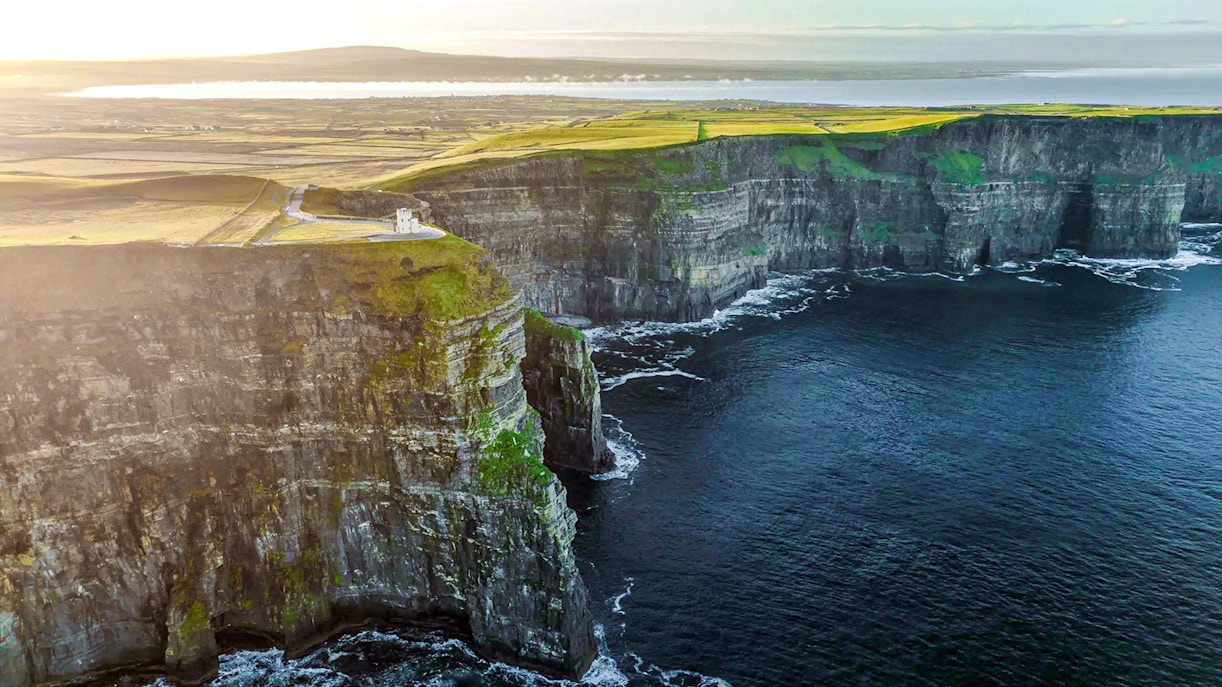
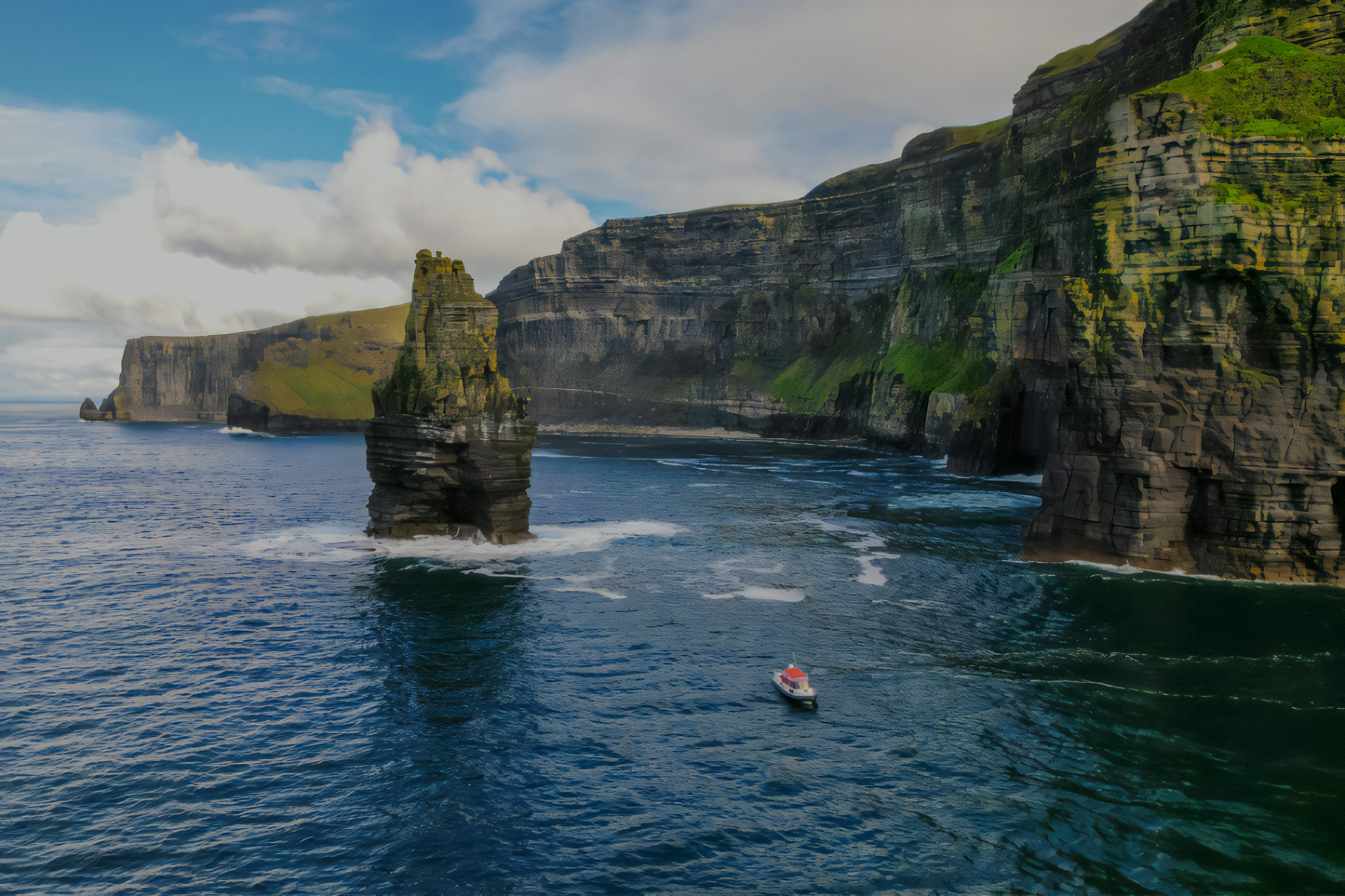
Rising along Ireland’s west coast in County Clare, the Cliffs of Moher are a 14 kilometre stretch of sheer sea cliffs overlooking the Atlantic Ocean. They reach up to 214 metres at their highest point, with walking paths and viewing areas along the edge. From the top, you can see the Aran Islands and Galway Bay on clear days, while waves crash against the rock face below.
Cliffs of Moher: Quick facts
Plan your visit to the Cliffs of Moher
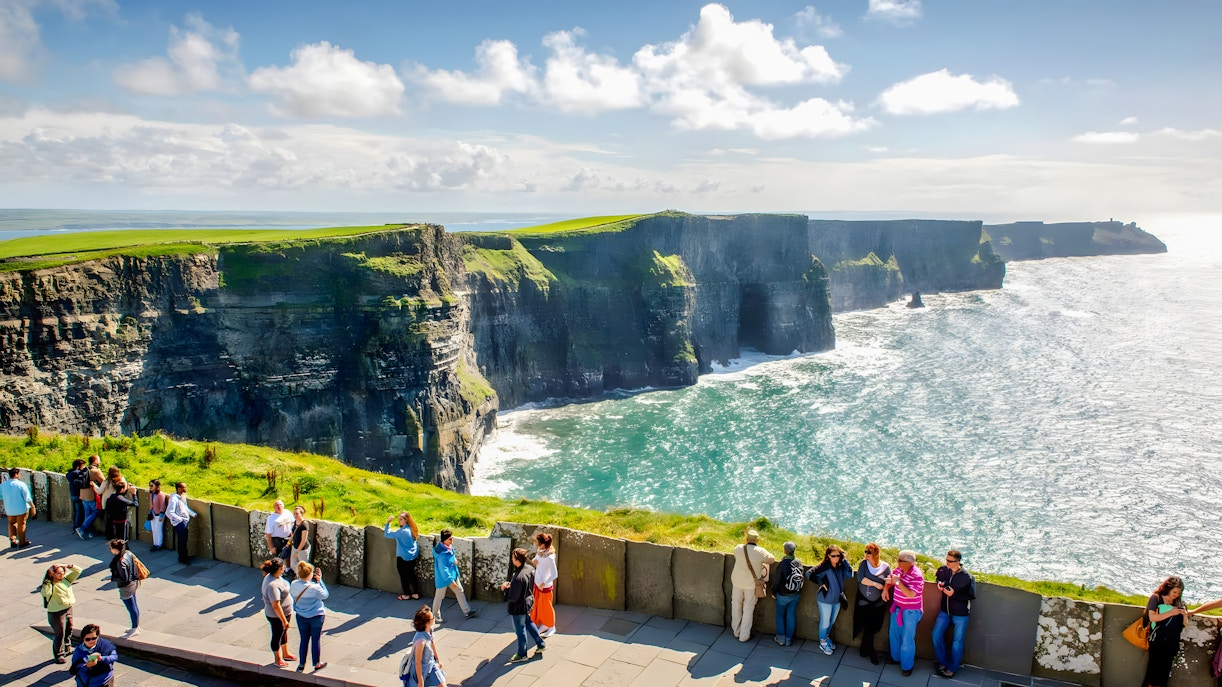
The Cliffs of Moher Visitor Centre is open daily throughout the year, with extended hours in summer and shorter hours in winter.
- March & April: 8am to 7pm
- May to August: 8am to 9pm
- September & October: 8am to 7pm
- November to February: 9am to 5pm
The last entry is one hour before closing time. The site remains open year-round except on December 24 to 26. Always check the latest weather forecast before visiting, as high winds can affect access to certain viewing areas.
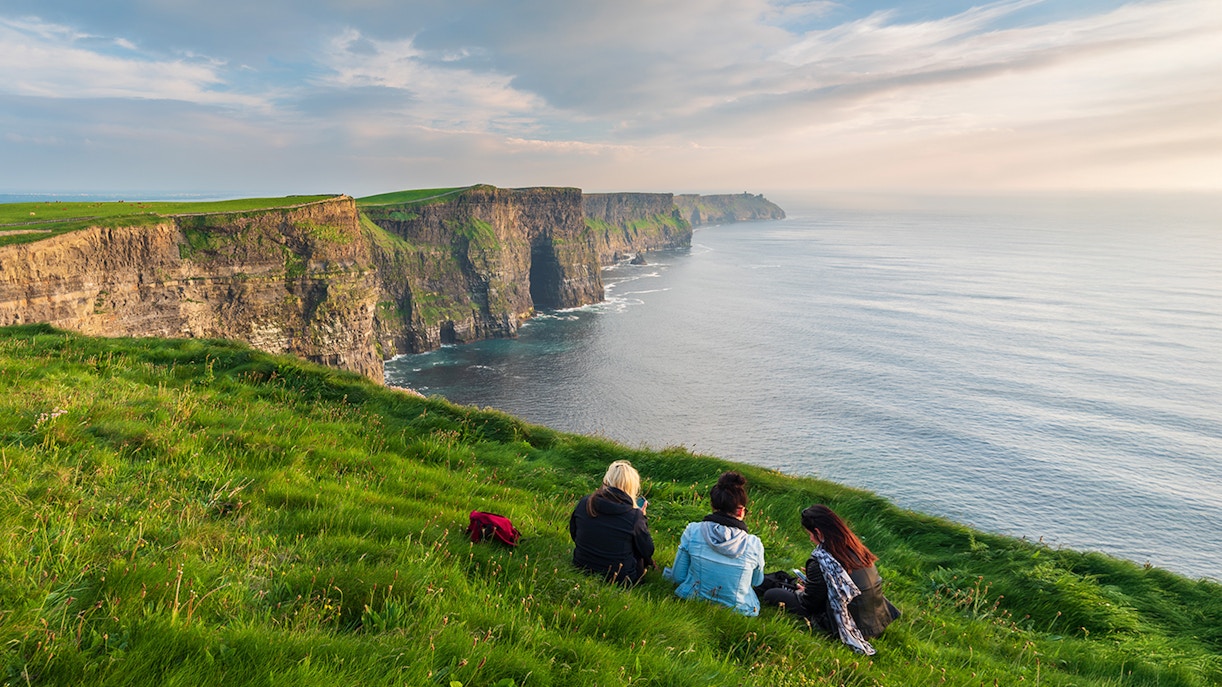
- Visit from April to June or September to early October for mild weather, lush scenery, and fewer crowds.
- Summer offers long daylight hours and clear views, making it perfect for photography and extended walks along the cliffs.
- Mornings and evenings provide softer light and quieter viewpoints, ideal for relaxed visits and scenic photo opportunities.
- Midweek visits are generally less crowded than weekends, allowing a calmer experience at major viewing points.
- Winter visits can be dramatic, with powerful Atlantic winds and misty views creating a more atmospheric setting.
The Cliffs of Moher are located along Ireland’s Wild Atlantic Way in County Clare, about 75 kilometers southwest of Galway City and 80 kilometers northwest of Limerick.
The visitor entrance lies between the villages of Liscannor and Doolin. From Doolin, the site is a 15-minute drive or a scenic 2-hour coastal walk. Regular bus connections from Galway, Ennis, and Limerick operate daily. Parking is available near the Visitor Centre.
What to do at the Cliffs of Moher?
1/5
Walk the coastal trail
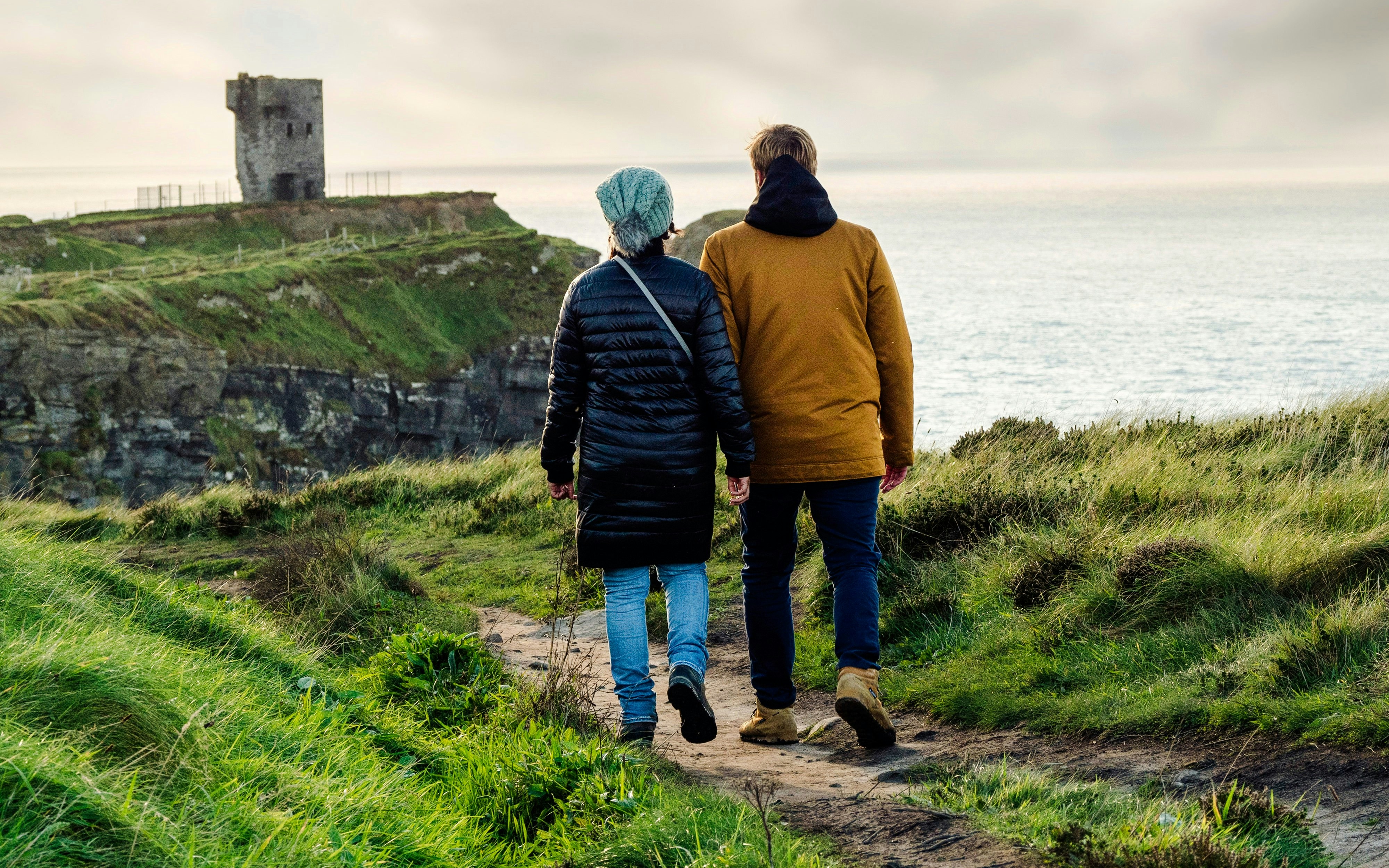
The Cliffs of Moher coastal trail stretches about 20 kilometers between Liscannor and Doolin, revealing ever-changing ocean views and wildflower-covered grasslands. The terrain varies from easy paths to rugged cliffside trails, so sturdy footwear is recommended. Walk a short section or tackle the full route for a true taste of Ireland’s Atlantic landscape.
Visit O’Brien’s Tower
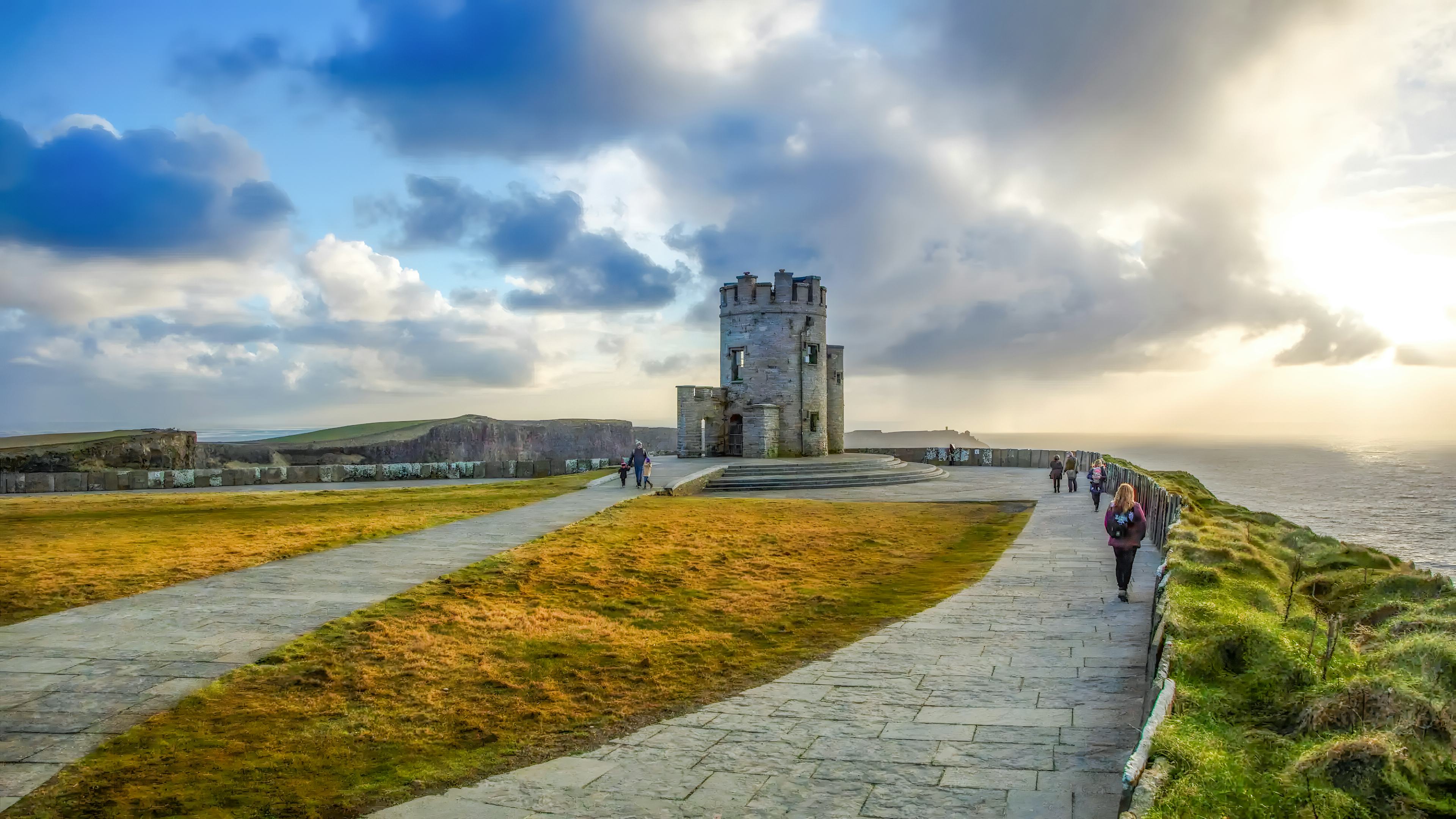
Perched near the highest point of the cliffs, O’Brien’s Tower was built in 1835 as a viewing point for visitors. From its top, you can see the Aran Islands, Connemara mountains, and the full sweep of the Atlantic coastline. The tower’s stone spiral staircase and restored battlements make it one of the most photographed landmarks in Ireland.
Explore the visitor centre exhibition
Set within the hillside, the visitor centre blends into the natural landscape with an eco-friendly design. Inside, interactive displays reveal the site’s geology, wildlife, and conservation work. The “Atlantic Edge” exhibition uses multimedia storytelling to bring millions of years of coastal evolution to life and you can also enjoy the 3D experience showing the cliffs from a seabird’s perspective.
Watch the seabird colonies
The cliffs are home to one of Ireland’s largest seabird colonies, with over 30,000 breeding pairs. From April to July, puffins, razorbills, and guillemots nest on the ledges, filling the air with fluttering wings and calls. The best viewpoints for birdwatching are near O’Brien’s Tower and the southern cliffs toward Hag’s Head.
Take a boat tour
Skip the typical boat loop and take a ferry to Inisheer, operating April through October. The ride passes along the Cliffs of Moher, giving you sweeping views from the water, before dropping you on the smallest Aran Island, where stone forts, quiet beaches, and winding lanes set the pace.
What to see at the Cliffs of Moher?
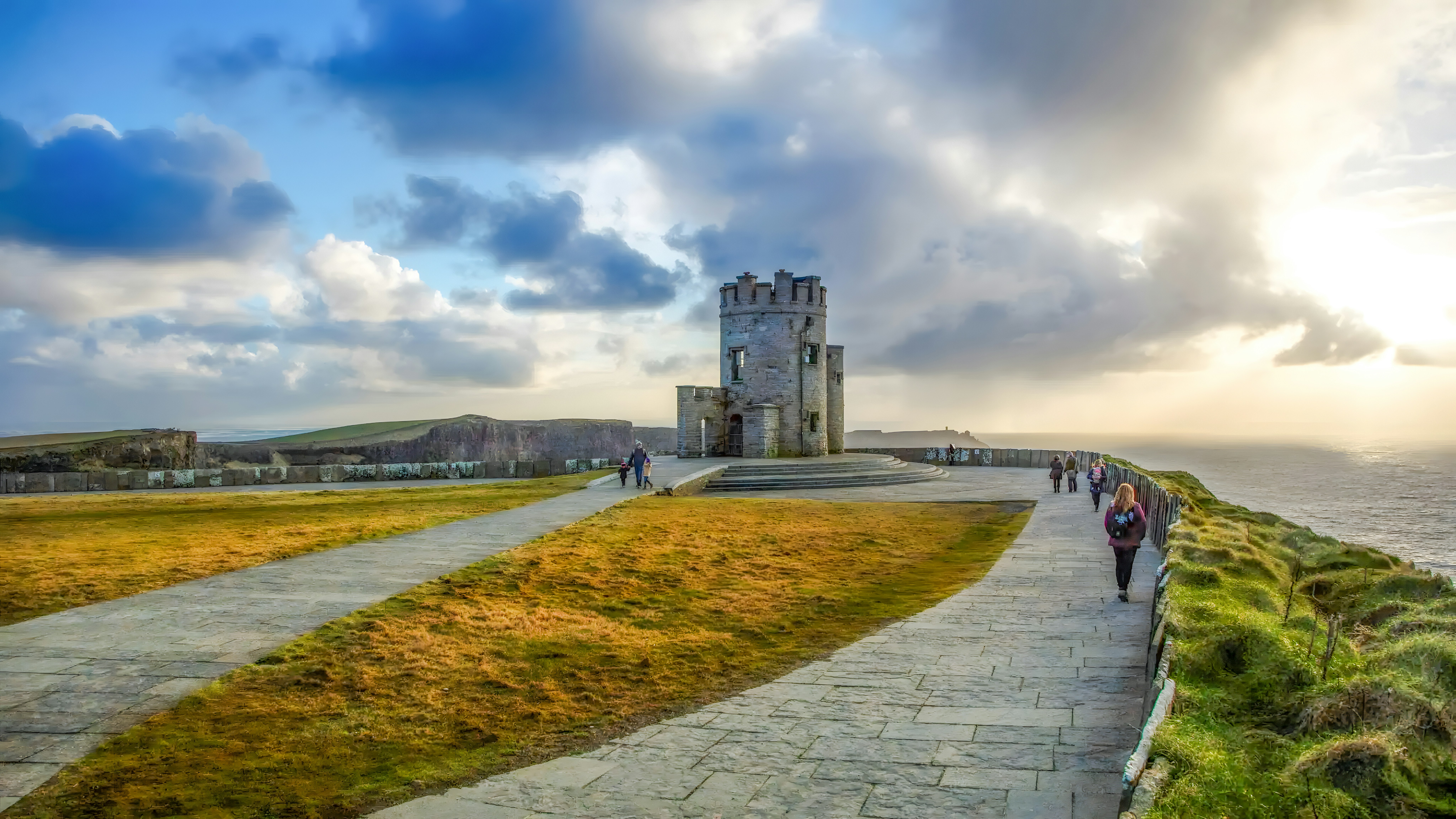
O’Brien’s Tower viewpoint
A stone tower at the cliff’s highest point offering panoramic views across the Atlantic Ocean and the Aran Islands. Best visited near sunset for golden light and clear skies.
History of the Cliffs of Moher in a nutshell
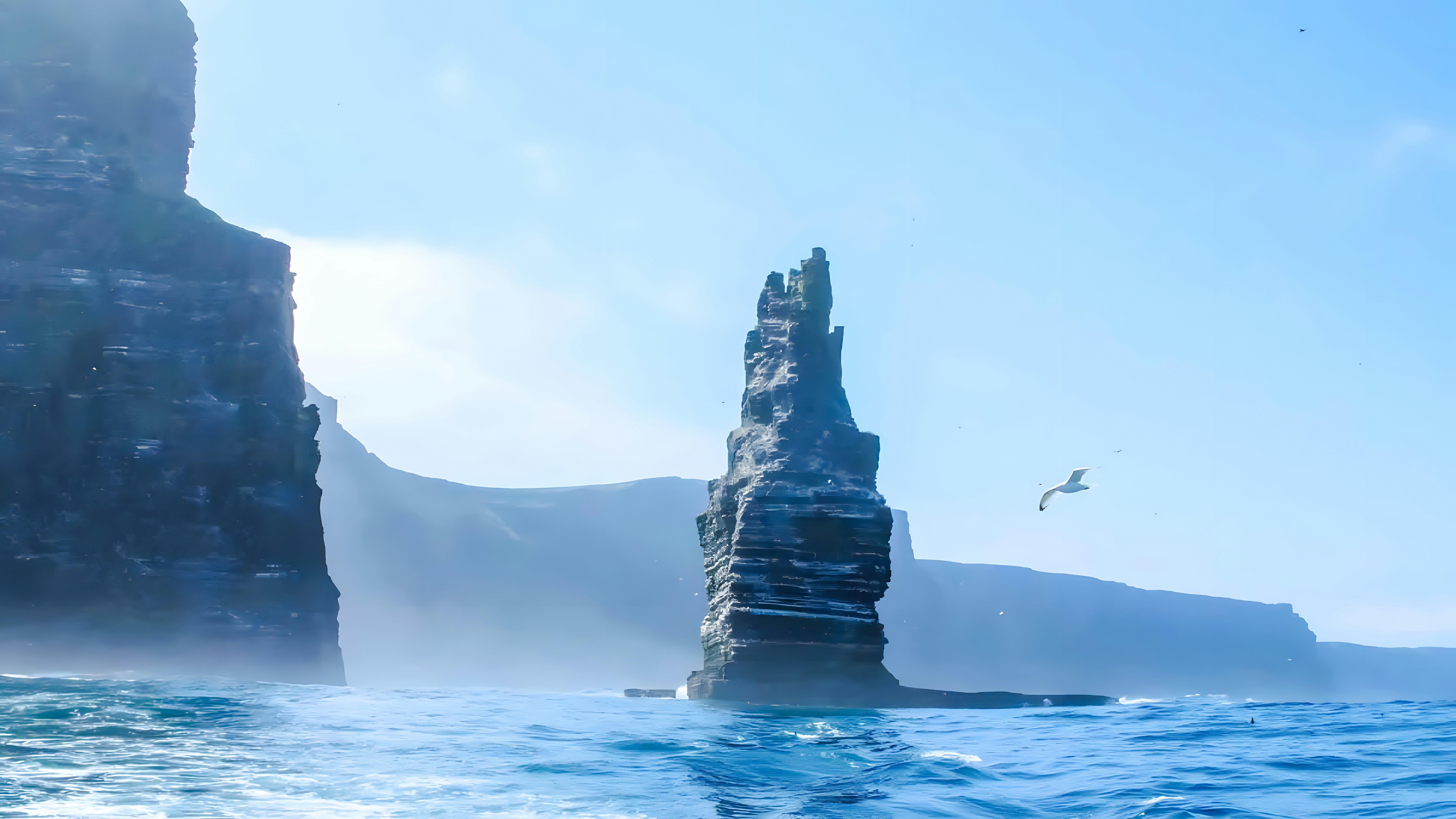
- Ancient formation: Formed over 320 million years ago, the cliffs developed from layers of shale and sandstone deposited on an ancient seabed during the Carboniferous period.
- Shaped by nature: Over millions of years, constant Atlantic winds and powerful waves eroded the rock, carving the steep vertical faces and jagged formations visible today.
- Name origin: The name “Moher” comes from a now vanished fort called Mothar, which once stood at Hag’s Head along the southern end of the cliffs.
- Early visitors: By the 19th century, the cliffs began attracting travelers, artists, and writers, drawn by the raw coastal landscape and expansive Atlantic views.
- Tourism begins: O’Brien’s Tower, built in 1835, marked the start of organized tourism, offering elevated views and encouraging more visitors to explore the cliffs.
Nature and conservation at the Cliffs of Moher
- Geopark status: The Cliffs of Moher are part of the Burren and Cliffs of Moher UNESCO Global Geopark, recognised for unique geology, coastal formations, and diverse natural habitats.
- Plant life: The cliffs support rare plant species adapted to both coastal winds and alpine conditions, including sea pinks, hardy ferns, and seasonal wild orchids.
- Wildlife habitat: These cliffs are important breeding grounds for seabirds such as Atlantic puffins and kittiwakes, which nest along ledges and steep rock faces.
- Conservation efforts: Boardwalks, marked paths, and controlled access points help reduce erosion, while visitor facilities are designed to limit environmental impact and support sustainable tourism.
Tips for visiting the Cliffs of Moher
- Check live wind conditions before arrival: Local forecasts and the Cliffs’ official site post real-time wind warnings, helping you decide if upper trails are safe to access.
- Bring a reusable lens cloth: The Atlantic mist often drifts up the cliffs, fogging camera lenses and phone screens, so microfiber cloths are invaluable for clear photos.
- Visit the South Platform first: Most tour buses stop near O’Brien’s Tower, so starting southward lets you enjoy quieter paths before the main crowds arrive.
- Carry a small snack or thermos: The café is near the entrance, but once on the trails, food options vanish. So, take a warm drink to make your windy walks far more pleasant.
- Download offline maps: Mobile service can drop along the coastal trail, so having offline navigation or trail markers saves confusion, especially in fog.
- Wear tinted sunglasses even on cloudy days: The reflected ocean light can be surprisingly harsh, especially when photographing or hiking for long stretches.
Frequently Asked Questions about the Cliffs of Moher
They’re famous for their dramatic coastal scenery, towering sea cliffs, and sweeping Atlantic views. It’s one of Ireland’s most visited natural landmarks.
The Cliffs of Moher are located in County Clare on Ireland’s west coast, overlooking the Atlantic Ocean along the Wild Atlantic Way.
On clear days, you can see the Aran Islands, Galway Bay, and wide stretches of the Atlantic coastline from multiple viewpoints
Yes, they offer some of Ireland’s most striking coastal views, with accessible paths, viewpoints, and opportunities to see wildlife and natural formations
Most visitors spend one and a half to two hours exploring viewpoints, walking paths, and the visitor centre at a comfortable pace
The cliffs reach up to 214 meters (702 feet) at their highest point near O’Brien’s Tower.
Late spring and early autumn offer mild weather, lush landscapes, and fewer crowds. Mornings and weekdays are generally the most peaceful times.
Yes, the Visitor Centre and main viewing platforms near O’Brien’s Tower are wheelchair accessible, with paved paths and ramps available.
Absolutely. Day tours run daily from Dublin, typically including round-trip transport, guided commentary, and several hours at the cliffs.
Yes, when you stay on designated trails. Avoid going too close to the edge, as wind and wet grass can make surfaces slippery.
Yes, the Visitor Centre has a café with local produce and sea-view seating. Doolin village nearby offers more dining options.
Visit the Burren National Park, take a ferry to the Aran Islands, or listen to live music in Doolin—Ireland’s traditional music capital.


