The attraction runs as a single path across three floors rather than a free-roam layout, so you move from room to room in the built sequence. Pace yourself at the photo-driven rooms, since groups tend to bottleneck there.
Quick Information
RECOMMENDED DURATION
2 hours
Timings
09:30–22:30
TICKETS
From $27.95
EXPECTED WAIT TIME - STANDARD
30-60 mins (Peak), 0-30 mins (Off Peak)
Did you know?
World of Illusion Dublin includes rooms based on real psychological and perception principles used in neuroscience and visual science experiments.
One room creates a “gravity-defying” staircase where balls roll uphill using optical trickery.
Many illusions are built so that they only work from certain angles — making photos from the right spot essential.
Is World of Illusion worth visiting?
World of Illusion feels like stepping into a space that constantly rewires how you see reality. One moment you’re walking through a normal-looking room, the next your balance is questioned in the Vortex Tunnel or your perception flips in the Ames Room where size and scale stop making sense. It’s playful, disorienting, and designed to make you interact rather than observe.
It was built with a simple intent: to turn optical science and perception tricks into something you can physically experience, not just read about. Instead of static exhibits, everything here is engineered to make you part of the illusion itself.
The emotional payoff is curiosity mixed with laughter and surprise—you leave with photos that don’t look real and a lingering sense that your brain can’t always be trusted. It’s one of those rare attractions where adults and kids react the same way: confusion first, then delight.
Skip it if you prefer quiet, low-stimulation museums or have under 90 minutes and want a fast, walk-through style sightseeing stop without interactive or sensory-heavy experiences.
What to see at World of Illusion?
1/6
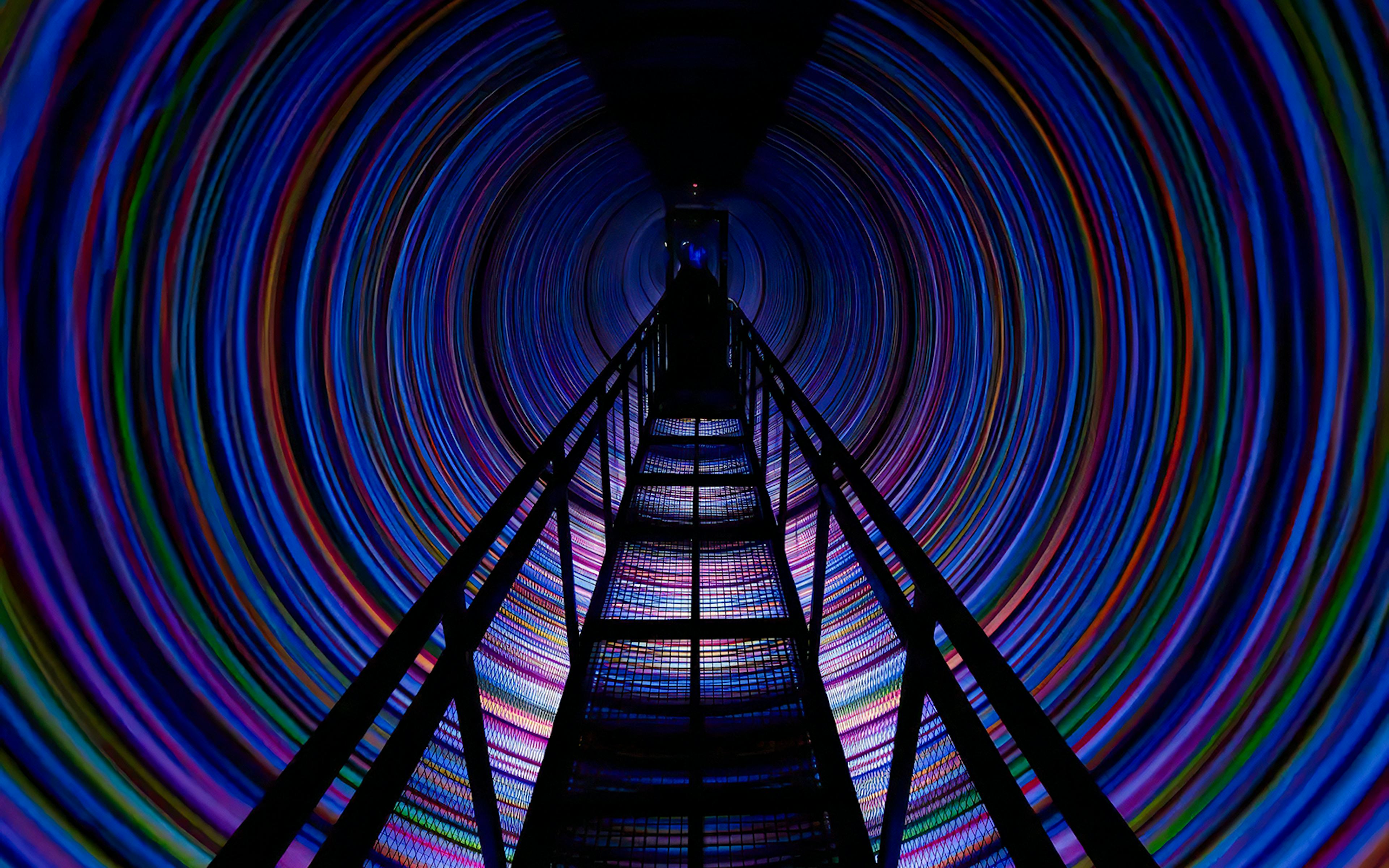
Vortex Tunnel
Step onto a stable bridge inside a spinning cylinder that convinces your brain the floor is moving. It's one of the most talked-about exhibits here, fun for most ages, though those prone to motion sickness may want to go slow.
Gravity-Defying Room
A tilted set where floors and walls sit at an angle, creating photos of you balancing sideways or dangling off a leaning bus stop sign. Suitable for all ages, with no real climbing or risk involved.
Ames Room
A deceptively shaped room where people standing in different corners look like they're shrinking or growing, even though the space appears level from one viewpoint. Suited to all ages, one of the most photographed rooms here — be ready to queue.
Infinity Mirror Tunnel
Walk through a corridor of angled mirrors and light that repeats endlessly in every direction, intensifying once the lights dim. It's a calm, walk-through space, comfortable for younger visitors, older guests, and anyone using a wheelchair or stroller.
Giant Kaleidoscope
Look through a large optical device that fragments the room into shifting, symmetrical patterns of light and colour. It's a fan favourite for photos, gentle enough for all ages, and a relaxed pause between the more disorienting rooms.
Interactive Illusion Exhibits
Beyond the headline rooms, hands-on stations let you test holograms, stereograms, and audio-based illusions, with panels explaining the science behind each one. Easy to rush past, but worth slowing down for, and calm enough for kids and adults alike.
How to explore World of Illusion?
Budget 45 to 90 minutes, depending on how much time you spend on photos — most visitors land somewhere in the middle. There's no fixed start time, though weekend afternoons tend to draw the biggest crowds.

Suggested route

Must-see
If you're short on time, prioritize the five signature rooms — Vortex Tunnel, Gravity-Defying Room, Ames Room, Infinity Mirror Tunnel, and Giant Kaleidoscope. Together they take roughly 45 minutes at a brisk pace and cover the core experience.
Optional: The standalone interactive panels, holograms, and audio-illusion stations add useful context but aren't essential — save them for a return visit if you're tight on time.

Guided vs self-paced
This is a self-guided attraction with no formal tour option. That works well here, since each room is intuitive enough that a guide isn't necessary to understand what you're seeing.
Brief history of World of Illusion
World of Illusion is a modern interactive attraction in Dublin built around optical illusions and hands-on visual experiences. It was created as part of the wider growth of immersive, experience-led attractions in city centres, focusing on visitor participation rather than passive viewing. The venue brings together a collection of illusion rooms and interactive installations designed to explore perception, perspective, and visual trickery in an accessible, self-guided format. Today, it operates as a multi-floor experience featuring over 70 interactive exhibits where visitors engage directly with optical effects and immersive environments.
Architecture of World of Illusion
- Style: Contemporary interior experience design focused on immersive illusion environments rather than traditional architectural expression.
- Structure: Multi-floor indoor layout divided into themed rooms using mirrors, lighting systems, angled surfaces, and modular installations to create visual distortion and altered depth perception. Materials typically include reflective surfaces, LED lighting, glass, and printed optical elements.
- Design approach: Built as a walkthrough experiential space where each room is designed to manipulate perception through controlled visual effects rather than architectural storytelling or historical design reference.
- Experiential detail: The layout guides visitors through continuously shifting environments where scale, orientation, and depth appear to change depending on viewpoint and movement.
Who built World of Illusion?
World of Illusion was developed by an experiential attraction team focused on creating interactive, illusion-based visitor experiences. The project was designed collaboratively rather than by a single named architect, combining elements of installation design, optical illusion concepts, and spatial experience planning. No public information has been disclosed regarding a lead architect or specific design studio associated with the attraction.
Frequently asked questions about World of Illusion Dublin
Yes. Booking World of Illusion tickets in advance is recommended during weekends and school holidays to secure preferred entry times.
Yes, tickets are available at the attraction, but advance booking is strongly recommended on busy days to avoid queues.
Yes, the World of Illusion Dublin suits children and adults alike. Most exhibits are hands-on, safe, and easy to understand, making them popular with families.
World of Illusion Dublin appeals to all ages, but children 5+ and adults enjoy the experiences most. Parents should help younger kids with some exhibits.
Most visitors spend between 60 and 90 minutes exploring the World of Illusion Dublin, though you can stay longer if the attraction is not crowded.
Yes, photography is encouraged throughout World of Illusion Dublin, and many exhibits are designed specifically for creative photos.
Food and drinks are not permitted inside the illusion experience to protect exhibits and ensure safety.
Some exhibits have visual intensity or flashing lights. Visitors with sensory sensitivities should plan accordingly and check accessibility services.