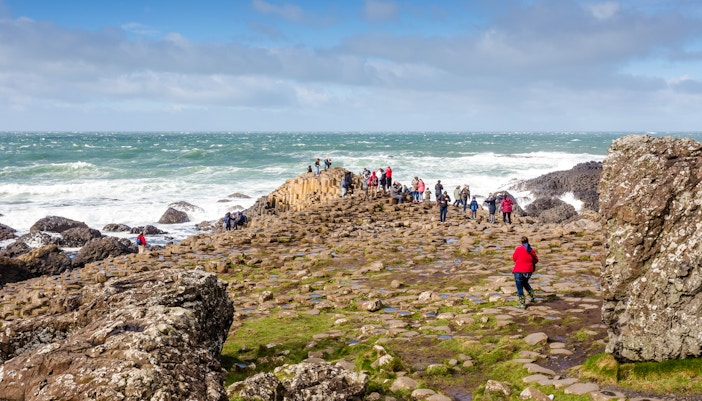
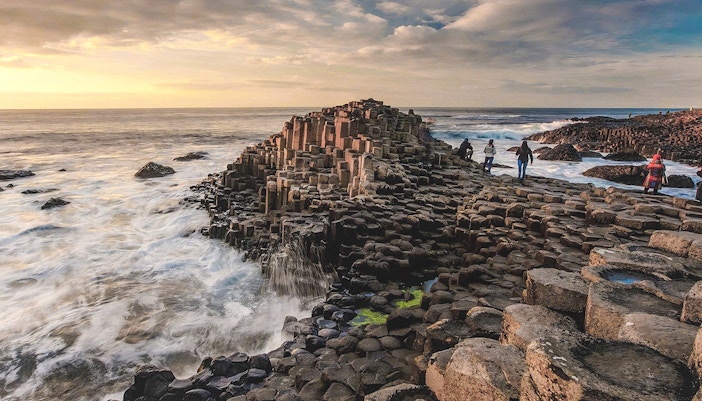
How to get to Giant’s Causeway | Directions & transport guide

The Giant’s Causeway lies on Northern Ireland’s rugged north coast, around 100 km from Belfast and about 260 km from Dublin. Most visitors reach it as a long day trip, choosing between guided tours, public transport combinations, or driving. Travel times range from 1.5–2 hours from Belfast and 3.5–4.5 hours from Dublin, depending on the route and mode. Tours are the most convenient, while self-driving offers flexibility along the Causeway coastal route.

Where is the Giant’s Causeway located?

Address: 44 Causeway Rd, Bushmills BT57 8SU, United Kingdom | Find on Maps

Distance from Belfast: ~95 km/60 mi
Time taken from Belfast: ~1.5–2 hr by car

Distance from Dublin: ~260 km/162 mi
Time taken from Dublin: ~3.5–4.5 hr by car; ~4–5 hr by public transport (with transfers)

Access: Park at the official visitor centre. From there, either take the paid shuttle bus down to the stones or walk the coastal path (~15–20 minutes downhill). There is no public parking at the stones themselves.

Recommended tours:

  • From Dublin: Giant’s Causeway Full-Day Tour
  • From Belfast: Giant's Causeway Full-Day Tour
Dublin to Giant’s Causeway: Time & distance

From Dublin: ~260 km
By train: ~4.5–5 hr (Dublin Connolly → Belfast Grand Central Station + bus)
By bus: ~5.5 hr (via Belfast)
By car: ~3 hr (no stops)
By tour (round-trip): ~12–13 hr (incl. sightseeing)

Belfast to Giant’s Causeway: Time & distance

From Belfast: ~100 km / 62 mi
By train: ~2.5–3 hr (Belfast Grand Central Station → Coleraine + bus)
By bus: ~2–3 hr (via direct bus)
By car: ~1–1.5 hr (no stops)
By tour (round-trip): ~6–9 hr (incl. sightseeing)

Why take a day trip to the Giant’s Causeway?

  • Simplifies how to get to the Giant’s Causeway without juggling train–bus connections.
  • Covers key Antrim Coast stops like Carrick-a-Rede viewpoint and Dunluce Castle.
  • Avoid parking stress near the Visitor Centre in peak season.
  • Fixed itineraries help manage limited daylight in winter.
  • Ideal for Dublin to Giant’s Causeway day trips, where DIY travel is long.

By train

Travelling by train is possible but indirect, making it better for travellers who enjoy scenic rail journeys.

Dublin to Giant’s Causeway: Take an Enterprise train from Dublin Connolly to Belfast Grand Central Station (~2 hr). From Belfast, continue by train to Coleraine (~1.5 hr), then transfer to bus 402 toward Bushmills and the Giant’s Causeway.

Belfast to Giant’s Causeway: Trains run from Belfast Grand Central Station to Coleraine regularly. From Coleraine, bus 402 connects to the Visitor Centre.

  • Duration: 4.5–5 hr total
  • Cost: €30–€50 from Dublin; £15–£25 from Belfast
  • Best for: Independent travellers
  • Cons: Multiple transfers; last-mile bus required

By bus

Buses are cheaper than trains but slower, especially from Dublin.

From Belfast: Translink bus 221 runs from Donegall Square North to the Giant’s Causeway.

From Dublin: Long-distance buses go to Belfast, followed by local buses.

  • Duration: 2–6 hr
  • Cost: £10–£20 (Belfast); €25–€35 (Dublin to Belfast)
  • Best for: Budget travellers
  • Cons: Longer travel times; limited frequency off-season

By car/self-drive

Driving is one of the most flexible ways of getting to the Giant’s Causeway.

From Belfast: Take the M2 north, then A26 and A2 following signs for Bushmills and the Causeway coastal route.

From Dublin: Follow the M1 to Belfast, then continue north.

  • Duration: 1.5 hr (Belfast); 3–3.5 hr (Dublin)
  • Costs: Fuel + parking (£10–£15)
  • Best for: Groups, photographers, coastal stops
  • Cons: Narrow coastal roads; busy summer parking

Compare your options

ModeDurationCostBest forNotes

Guided tour

6–13 hr

€70–€100

First-timers

Door-to-door ease

Train

2.5–4.5 hr

€30–€50

Independent travellers

Transfers needed

Bus

3–5 hr

€10–€35

Budget travellers

Slower

Car

1.5–4 hr

£20+

Flexibility

Parking limits

Getting around near the Giant’s Causeway

  • Walking (most immersive option): The walk from the Visitor Centre to the stones takes around 15–20 minutes downhill on a paved path. The return walk is uphill and can be tiring, especially in windy conditions. Coastal and clifftop trails branch off from the main path and are clearly marked, but surfaces can be uneven after rain.
  • Visitor Centre shuttle bus: A paid shuttle runs frequently between the Visitor Centre and the lower access point near the stones. It’s the best option if you want to save energy for exploring the formations themselves. The shuttle can pause during high winds or extreme weather.
  • Driving: Private cars must park at the Visitor Centre. There is no drop-off or parking near the stones, and roadside stopping is enforced. In peak summer months, the car park can fill by late morning.
  • Local buses: Local Translink buses serve Bushmills village, not the stones directly. From Bushmills, you can walk (~45–50 minutes) or take a seasonal connection to the Visitor Centre.
  • Taxis: Taxis operate from Bushmills and Coleraine but are best used for one-way transfers, as availability near closing time can be limited.

Suggested itinerary for the Giant’s Causeway

Morning

Arrive early (ideally before 10am) and start with the downhill walk from the Visitor Centre to the stones. Spend time exploring the basalt columns and nearby formations while the area is quieter.

Late morning

Continue along the lower coastal path toward the Organ and Chimney Stacks. If conditions are calm, this section offers some of the best photography angles.

Midday

Return to the Visitor Centre via the shuttle or uphill path. Have lunch at the café or head to Bushmills village for more dining options.

Afternoon

Explore one of the clifftop walking routes for panoramic views. If driving or on a tour, combine your visit with nearby stops such as Dunluce Castle or a Carrick-a-Rede viewpoint before returning.

Optional swap: If the weather is poor, spend more time inside the Visitor Centre and shorten the exposed coastal walk.

Handy tips

  • Arrival strategy: The site gets busiest between 11am and 2pm when tour buses overlap. Arriving early (10am) or after 3:30pm offers noticeably quieter paths.
  • Weather reality: Wind is often stronger at the stones than at the car park—check coastal wind forecasts, not just rain predictions.
  • Shuttle timing: Take the shuttle down and walk back up if you want to conserve energy while still enjoying the scenery.
  • Parking nuance: Visitor centre parking is free with a ticket; arriving late in summer can mean waiting for spaces as there’s no overflow parking nearby.
  • Footwear tip: The stones are uneven and can be slippery even in dry weather—grip matters more than waterproofing here.

Frequently asked questions about getting to Giant’s Causeway

Is a guided tour worth it for the Giant’s Causeway?

Yes, especially for Dublin to Giant’s Causeway day trips. Tours eliminate multiple train and bus transfers, manage border-crossing logistics, and bundle coastal stops like Dunluce Castle that are difficult to reach independently in one day.

What’s the cheapest way to get to Giant’s Causeway?

The lowest-cost route is public transport via Belfast or Coleraine using Translink buses, but it requires careful scheduling and adds significant travel time.

What’s the fastest way of getting to Giant’s Causeway?

Driving from Belfast is the fastest option, taking around 1.5–2 hours. From Dublin, a self-drive or a guided tour is the quickest realistic choice.

Can you do Dublin to the Giant’s Causeway by train in one day?

It’s possible but demanding. The Dublin to Giant’s Causeway train route involves at least two transfers and leaves limited time on-site unless you start very early and return late.

Do I need to book parking or tickets in advance?

Parking access is tied to the Visitor Centre ticket. In summer and on weekends, booking ahead helps avoid delays or limited entry windows.

How long should I plan to spend at the Giant’s Causeway?

Most visitors spend 1.5–2.5 hours on-site, longer if combining coastal walks or photography-focused visits.

More Reads

Giant's Causeway basalt columns by the sea at sunset, Northern Ireland.

Timings

giant's causeway

Plan Your Visit

Giant's Causeway basalt columns with visitors exploring the coastal landscape in Northern Ireland.

About Giant's Causeway