What is the Giant’s Causeway?

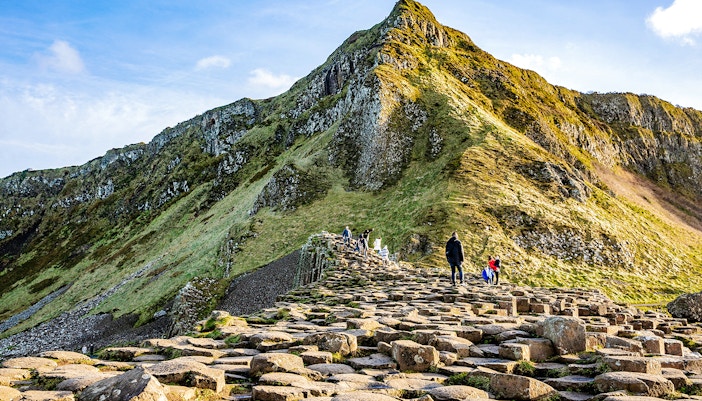
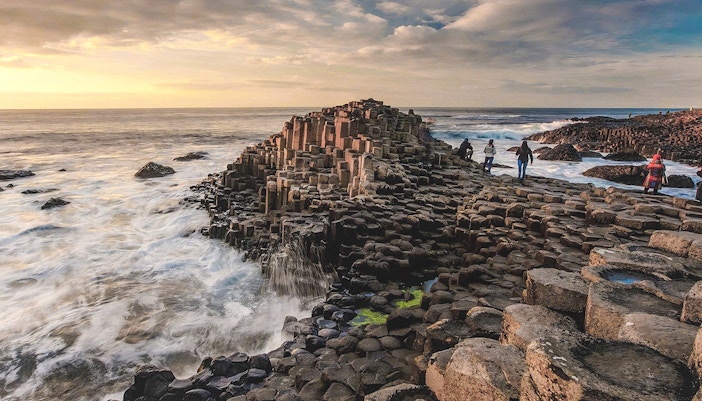
The Giant’s Causeway is a dramatic coastal landscape on Northern Ireland’s Antrim Coast, famous for its tightly packed hexagonal basalt columns formed by ancient volcanic activity. Stretching from the cliffs into the North Atlantic Ocean, the site features over 40,000 interlocking stone columns, creating a natural stone pathway that feels otherworldly. What makes the Giant’s Causeway so striking is the contrast between its geometric formations and the wild coastal surroundings—crashing waves, sweeping sea views, and ever-changing light. Recognised as a UNESCO World Heritage Site, the Giant’s Causeway draws visitors interested in geology, mythology, photography, and coastal walking, all within a compact and walkable area.

Plan your visit to the Giant’s Causeway

Opening hours

  • The Giant’s Causeway is accessible year-round, with the outdoor landscape open daily.
  • The Giant’s Causeway Visitor Centre operates on seasonal hours, typically opening from 10am to 4pm, with extended hours during summer months. Winter hours are shorter, and extreme weather may affect access to cliff paths. 
  • The site is generally open on public holidays, though visitor centre services may be limited on Christmas Day.

Best time to visit

  • The best time to visit the Giant’s Causeway in Ireland is between April and September, when weather conditions are milder, and coastal paths are safer. Summer offers longer daylight hours but also higher visitor numbers. Spring and early autumn provide fewer crowds and dramatic sea conditions. 
  • Weekdays and early mornings are quieter, while late afternoon visits often reward visitors with softer light and fewer tour groups.

Location

The Giant’s Causeway is located on the north coast of County Antrim, about 100 km from Belfast.

Address: 44 Causeway Rd, Bushmills BT57 8SU, United Kingdom | Find on Maps

Nearby landmarks: Bushmills Distillery (4 km) and Dunluce Castle (7 km)

Public transport options include trains to Coleraine followed by bus connections, while drivers can access the site via the Causeway Coastal Route, one of Ireland’s most scenic drives.

Get directions to Giant’s Causeway

What to do at the Giant’s Causeway?

Walk among the basalt columns

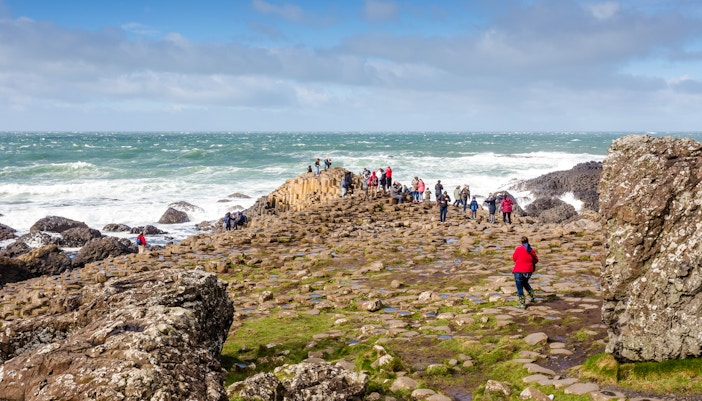
Strolling across the iconic stone formations is the core Giant’s Causeway experience. The walk is relatively easy, with uneven surfaces that require sturdy footwear. Visitors can explore formations like the Giant’s Boot and Wishing Chair, moving at their own pace while listening to waves crash nearby. Most visitors spend 45–60 minutes exploring the stones themselves.

Explore the coastal walking trails

The Giant’s Causeway in Ireland is surrounded by well-marked cliff-top trails offering panoramic ocean views. Routes range from gentle coastal paths to more strenuous hikes toward Dunseverick Castle. These walks are ideal for photography lovers and those seeking quieter viewpoints away from the main stones.

Visit the Giant’s Causeway Visitor Centre

The award-winning Visitor Centre provides geological explanations, interactive exhibits, and insights into the myths surrounding the Giant’s Causeway. Audio guides are available, and the centre includes a café and gift shop. This indoor experience is especially valuable during poor weather.

Join a guided tour

Guided tours add context to the Giant’s Causeway, Ireland visit, combining storytelling, science, and local legends. Tours often include nearby highlights like Dunluce Castle or Bushmills Distillery, making them ideal for first-time visitors without a car.

Book tickets

History of the Giant’s Causeway in a nutshell

The Giant’s Causeway was formed around 60 million years ago during intense volcanic activity, when lava cooled and fractured into polygonal columns. Over time, erosion exposed the formations seen today.

Long before scientific explanations, local folklore told of the giant Finn McCool, who was said to have built the causeway to Scotland to confront a rival giant. These legends remain an important part of the Giant’s Causeway, Ireland's identity.

The site gained international recognition in the 18th century and was designated a UNESCO World Heritage Site in 1986, protecting it as one of the world’s most significant natural landscapes.
Geological significance of the Giant’s Causeway

The Giant’s Causeway is one of the finest examples of columnar basalt formation in the world. Around 40,000 columns, mostly hexagonal but some with four, five, or seven sides, demonstrate how volcanic lava contracts as it cools. This rare geological clarity makes the Giant’s Causeway in Ireland an important reference site for scientists and a visually striking destination for visitors. Interpretive panels along the paths explain these processes in simple, accessible language.

Tips for visiting the Giant’s Causeway

  • Time your visit with the tide: Low tide reveals more of the basalt columns and makes formations like the Chimney Stacks easier to see. Tide tables are worth checking before you go.
  • Use the upper paths first: Start with the cliff-top walk and descend later; this gives better context and avoids arriving at the stones with large tour groups.
  • Skip the shuttle during quieter hours: Walking down from the Visitor Centre takes around 15–20 minutes and offers better views; the shuttle is most useful only for limited mobility or bad weather.
  • Watch footing near wet columns: Sea spray makes lower stones slippery even on dry days; step on flatter, drier columns rather than darker, algae-covered ones.
  • Photographers, bring a lens cloth: Fine sea mist often settles on camera lenses near the water, especially around the Organ Pipes and Amphitheatre.
  • Don’t rush just the main stones: Many visitors spend only 20 minutes at the Grand Causeway; allow extra time for the Middle Causeway and cliff viewpoints for a fuller experience.

Plan your visit to the Giant’s Causeway

Frequently asked questions about the Giant’s Causeway

What is the Giant’s Causeway known for?

The Giant’s Causeway is known for its unique hexagonal basalt columns formed by volcanic activity and its dramatic coastal setting in Northern Ireland.

What is the best season to visit the Giant’s Causeway in Ireland?

Late spring to early autumn offers the best balance of weather, daylight, and accessibility, though summer is busiest.

What should I pack for my trip to the Giant’s Causeway?

Pack waterproof clothing, sturdy shoes, a windproof jacket, and a camera for changing coastal light.

Is the Giant’s Causeway wheelchair accessible?

The Visitor Centre is accessible, but access to the stones involves steep paths and uneven surfaces that may be challenging.

What are the must-do activities at the Giant’s Causeway?

Walking among the basalt columns, visiting the amphitheatre, and exploring coastal trails are top experiences.

How do I get around the Giant’s Causeway area?

Most areas are explored on foot. Shuttle buses operate between the Visitor Centre and the stones during peak seasons.

More Reads

Giant's Causeway basalt columns with visitors exploring the coastal landscape in Northern Ireland.

Plan Your Visit

giant's causeway

Timings

Visitors walking on basalt columns at Giant's Causeway, Northern Ireland.

Getting There